Clear aligner therapy has changed how many adults and teens approach orthodontic care: it blends clinical precision with a low-profile, everyday-friendly experience. Invisalign® uses a sequence of custom-made, nearly invisible trays to move teeth in carefully planned stages. For people who want to straighten their smile without the visual or lifestyle compromises of traditional braces, this approach offers predictable results while letting patients maintain normal routines for eating, oral hygiene, and social life.
How clear aligners work: a stepwise, digital process
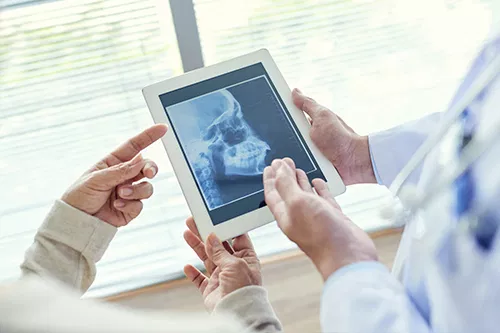
Treatment starts with a detailed digital assessment. Advanced intraoral scanning captures the exact position of each tooth and the surrounding tissues, producing a 3-D model clinicians use to map the entire course of movement. That virtual plan allows the team to design a sequence of aligners that move teeth in small, controlled increments — typically one or two weeks per aligner depending on your personalized plan.
Each aligner is fabricated to apply forces at specific points, guiding teeth toward their intended positions. When attachments or small tooth-colored bumps are recommended, they act as temporary anchors that improve control for rotations, extrusions, or other complex movements. These features work together to make the predicted stages of movement more reliable from start to finish.
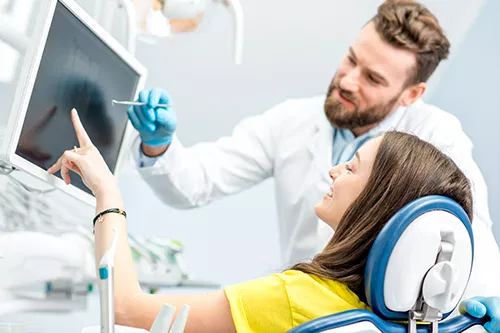
Because the treatment plan is established up front, patients can often see a digital preview of their projected result. That visibility helps set clear expectations and gives both clinician and patient a roadmap for periodic review and minor adjustments as needed. The result is a modern orthodontic experience that prioritizes planning, comfort, and clinical oversight.
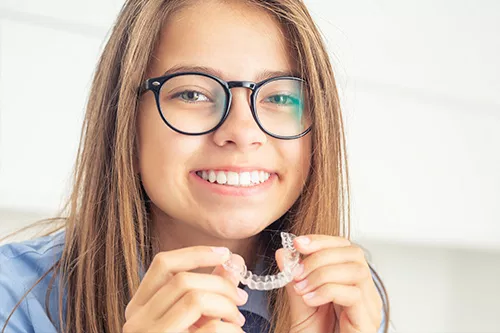
Personalized aligners created from a precise digital plan help translate clinical goals into everyday progress.
Comfort, daily life, and practical considerations
One of the biggest practical advantages of clear aligners is the ability to remove them for short periods. That makes eating and cleaning far easier than with fixed appliances. Patients who value minimal disruption find they can continue to enjoy most foods and maintain their regular brushing and flossing routines without special tools or additional steps.
Wearing aligners consistently — generally around 20 to 22 hours per day — is the single most important factor in staying on track. Routine checkups with your provider allow progress to be reviewed and small corrections made if necessary, ensuring the treatment stays aligned with the original plan. The emphasis is on collaboration between the clinician and the patient to achieve predictable outcomes.
Because aligners are crafted from smooth, polished materials, many patients report less irritation to lips and cheeks compared with brackets and wires. The removable nature of the appliances also makes it straightforward to maintain oral health throughout treatment, reducing the risk of plaque accumulation and making preventive care simpler to manage.
What to expect during your Invisalign® journey
Initial evaluation and candidacy
Your first visit focuses on a thorough examination and a discussion of goals. We review bite function, tooth alignment, and oral health to determine whether aligner therapy is the right option. This assessment establishes the clinical goals and any preparatory care that might be needed before aligners begin.
The clinician will explain the expected sequence of visits, what success looks like for your smile, and any adjunctive procedures that could improve outcomes — for example, managing periodontal health or replacing missing restorations before movement. Clear communication up front helps set realistic timelines and fosters a partnership for the duration of care.
At this stage you’ll receive a clear explanation of how the planning technology is used to simulate outcomes. That simulation provides a visual framework for the steps ahead and supports informed decision-making for patients who want to understand precisely what the treatment will entail.
Creating a tailored treatment plan
After initial records are taken, your provider collaborates with the lab technology to translate the 3-D scan into a step-by-step treatment sequence. Each stage is carefully designed to achieve specific tooth movements while preserving function and aesthetics. This level of planning allows the team to anticipate challenges and incorporate solutions from the outset.
Plans often include guidance on when to switch aligners, schedule follow-up appointments, and use auxiliary tools like elastics or attachments where clinically indicated. That structure keeps treatment transparent and manageable, allowing patients to integrate therapy into daily life with confidence.
Throughout treatment, monitoring is essential. Regular check-ins confirm that progress follows the predicted path and give the clinician opportunities to fine-tune the plan, ensuring the final alignment meets both health and cosmetic objectives.
What daily wear and maintenance look like
Routine care for aligners is straightforward: remove, rinse, and brush them gently to keep them clear and fresh. When not worn, aligners should be stored in a protective case to avoid distortion or loss. These small habits make a meaningful difference in how smoothly the treatment progresses.
Brush and floss after meals before reinserting aligners to maintain gum and tooth health. Consistent oral hygiene helps prevent staining, decay, and gum inflammation during the course of movement. Your clinician will provide specific cleaning recommendations for your aligners, as different materials may have distinct care needs.
If any aligner feels unusually tight or uncomfortable beyond the expected adjustment period, contact the office for advice. Minor pressure is normal when switching trays, but persistent discomfort can usually be resolved quickly with a simple adjustment or check-in.
Support and progress checks from your care team
Even though aligners are designed for independent use, professional oversight remains a cornerstone of successful treatment. Periodic appointments let your provider verify fit, evaluate movement, and address any questions that arise. These visits are typically brief but essential for maintaining momentum toward the goal alignment.
Communication with the dental team about lifestyle habits, wear patterns, or changes in comfort helps maintain the integrity of the plan. If additional refinement is needed at the end of the active phase, the clinician can recommend retention strategies to preserve results over the long term.
A collaborative approach—where patients follow wear instructions and the clinician offers targeted guidance—produces the most consistent, functional, and aesthetically satisfying outcomes.
Educational resources and what to read next
For many patients, a few short educational resources help clarify what day-to-day treatment will look like. We provide materials that explain aligner care, what to expect at review visits, and tips for maintaining dental health while your teeth move.
If you prefer a demonstration, our office can walk you through typical aligner handling and hygiene techniques during an initial consultation. Practical, evidence-based information gives patients the confidence to participate actively in their own care and supports better outcomes.
*Invisalign® is a registered trademark of Align Technology, Inc.
A straighter smile can be more than cosmetic: improved alignment often supports better chewing function, easier hygiene, and long-term dental stability. At Woodside Dental, our focus is on combining proven aligner technology with careful clinical oversight so each treatment is tailored to the individual’s health goals and lifestyle. If you’d like to learn more about how clear aligner therapy might fit your life, contact us for additional information or to arrange a consultation.