Periodontal Treatment
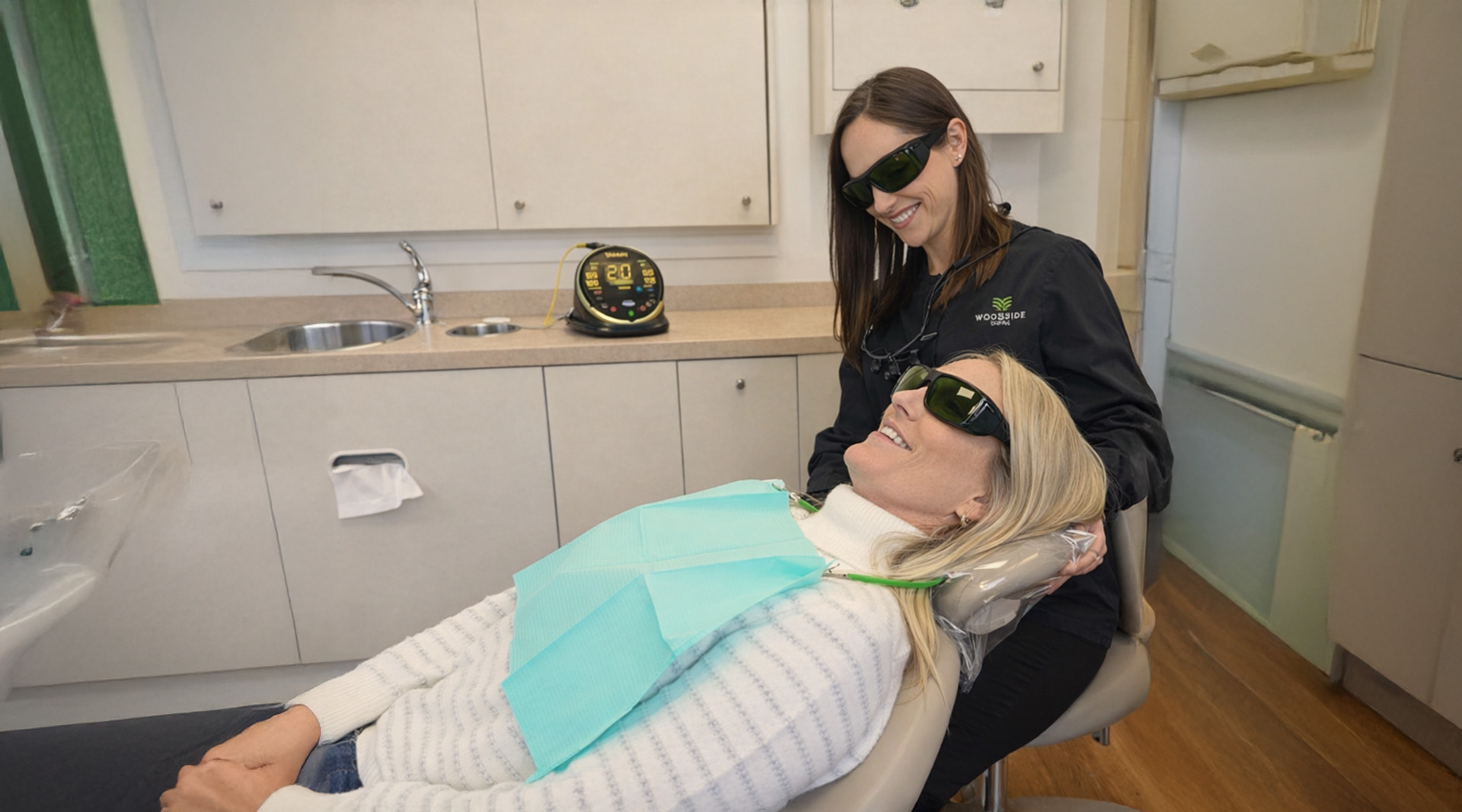
Gum disease is the leading cause of adult tooth loss, yet it often begins quietly and goes unnoticed until serious damage has occurred. Research indicates that periodontal conditions affect a large portion of adults, but many cases are preventable or manageable when detected early. At the office of Woodside Dental, we help patients understand the signs, causes, and treatment pathways for periodontal disease so they can protect their smiles and overall health.
Periodontal disease starts with the accumulation of dental plaque — a sticky film of bacteria that forms on tooth surfaces. When plaque is not removed regularly, it hardens into tartar (calculus), which sits at and below the gumline and provides a reservoir for harmful microbes. The presence of these bacteria triggers the body’s immune response, which leads to inflammation of the gum tissues.
Inflammation itself damages the tissues that support the teeth. Over time, chronic inflammation can break down the connective tissue and bone around teeth, creating pockets where bacteria multiply and accelerate tissue loss. This cycle of infection and destruction explains why early intervention is essential: the longer bacteria remain under the gums, the harder it becomes to restore healthy support.
Because the early stages can be painless, routine dental examinations and professional cleanings are vital. Regular monitoring allows clinicians to spot subtle changes in pocket depths, gum contour, and attachment levels before the condition progresses to irreversible damage.
Many people dismiss minor changes in their mouth as temporary or insignificant, but small symptoms can be the first indication of a developing periodontal problem. Paying attention to changes in color, texture, or bleeding when brushing or flossing gives you a chance to act before deeper tissues are affected.
When you notice persistent redness, tenderness, or breath that doesn’t respond to routine hygiene, schedule an evaluation. A clinical exam can determine whether those signs represent reversible inflammation or the beginning stages of a more advanced condition that requires treatment.
Below are common signs that warrant professional attention:
Inflamed and red gums
Bleeding when brushing or flossing
Receding gums and exposed tooth root surfaces
Sensitivity to hot or cold temperatures
Bad breath or a bad taste in the mouth
Teeth that feel loose
New spaces developing between the teeth or a change in the bite
Change in the fit of existing partial dentures
Discharge around the teeth and gums
Sharp or dull pain when biting down or chewing food
Oral health is connected to overall health. Chronic gum inflammation has been associated with systemic conditions such as cardiovascular disease, diabetes, and respiratory issues. While the exact mechanisms are still under study, controlling periodontal inflammation decreases the local bacterial load and may reduce systemic inflammatory burden.
Preventive care and early treatment of periodontal disease not only preserve teeth and gum tissue but also contribute to broader health management. For people with diabetes, for example, treating gum disease can help with metabolic control; likewise, reducing oral inflammation can be an important step for individuals managing heart disease risk factors.
At Woodside Dental, our approach focuses on prevention, timely diagnosis, and evidence-based therapy that addresses both local oral needs and the potential implications for general health.
Gingivitis is the earliest, reversible stage of gum disease. It is characterized by gum inflammation without loss of attachment or bone. Patients may notice redness, mild swelling, and bleeding during brushing or flossing, but often there is little or no pain. Because the supporting structures remain intact, gingivitis can typically be resolved with improved oral hygiene and professional care.
Treatment at this stage emphasizes removing the irritants — plaque and tartar — and establishing consistent home care habits. A tailored cleaning plan, instruction on effective brushing and interdental cleaning, and short-term follow-up can restore healthy gum tissue in many cases.
Acting early not only prevents tissue destruction but also simplifies care. When inflammation is limited to the gingival tissues, the interventions required are less invasive and more predictable than those needed for advanced disease.
If gingivitis goes untreated, the condition can progress to periodontitis, where the inflammation extends to the supporting tissues and bone. Attachment loss and pocket formation occur as the connective tissue and bone that anchor the teeth are undermined. At this stage, the risk of tooth mobility and eventual tooth loss increases.
Clinicians assess periodontitis by measuring pocket depths, evaluating attachment levels, and taking radiographs to document bone loss. The disease may advance slowly or rapidly depending on factors such as genetics, smoking, systemic health, and oral hygiene practices.
The primary goals of periodontal care in this stage are to control the microbial infection, reduce inflammation, and stabilize the supporting structures so that function and comfort can be preserved.
A personalized treatment plan begins with a comprehensive periodontal assessment. This includes charting of pocket depths, evaluation of bleeding and mobility, and a review of medical history and risk factors. From there, clinicians recommend the least invasive approach that will reliably control disease and restore health.
Treatment falls along a spectrum — from non-surgical management aimed at eliminating bacterial deposits to surgical and regenerative procedures designed to repair or reshape damaged tissues. Adjunctive therapies, such as localized antimicrobials or systemic medications, can be incorporated when appropriate to support healing.
We emphasize shared decision-making and will explain the purpose, expected outcomes, and aftercare associated with each option so you can make informed choices about your care.
When periodontal problems are identified early, non-surgical measures are often effective. Scaling and root planing — deep cleaning below the gumline — removes plaque and calculus from root surfaces and helps reduce pocket depth. Smoothing the root surface supports reattachment of the gum tissue and limits bacterial recolonization.
In addition to mechanical cleaning, clinicians may place localized antimicrobials beneath the gums or recommend short-term systemic agents in selected cases to help control infection. Patient adherence to an improved home-care routine and consistent maintenance visits are crucial to long-term success.
The overall strategy is to use the least invasive, evidence-based methods that will return the mouth to health and maintain stability over time.
If non-surgical therapy does not achieve the desired improvement, surgical options are considered to address persistent pockets or structural defects.
For pockets that remain deep despite conservative care, surgical treatment can provide direct access to clean root surfaces and reshape the underlying bone and tissue. Flap procedures expose the roots for thorough debridement and, when needed, allow clinicians to recontour bone or place graft materials to support regeneration.
The primary aims of surgical therapy are to eliminate pathogenic bacteria, reduce pocket depth, and restore a more maintainable anatomy. When appropriate, regenerative techniques — including bone grafts and guided tissue regeneration — can rebuild lost support and improve long-term prognosis.
Modern adjuncts, such as dental lasers, may be used in selected cases to reduce pocket bacteria and refine soft tissue contours. Each surgical plan is tailored to the patient’s specific condition and overall treatment goals.
Following any surgical intervention, careful maintenance and patient home care are essential to preserve the results and protect the investment in oral health.
Summary: Periodontal disease ranges from reversible gum inflammation to destructive infections that affect the bone and soft tissues supporting teeth. Early recognition, consistent home care, routine professional monitoring, and timely treatment are the cornerstones of prevention and long-term control. If you have concerns about swollen or bleeding gums, persistent bad breath, or changes in tooth position or comfort, please contact us to learn more about how we can help you protect and restore your periodontal health.
We look forward to meeting you. Call our Columbia dental office at (410) 312-5660 or request an appointment online to set up your first visit. We’ll be in touch soon.

Woodside Dental
6345 Woodside Court, Suite 103
Columbia, MD 21046
PHONE: (410) 312-5660